



 View in the ChatGPT registry
- Brand
- Unknown
- Category
- Pending
- Primary Subcategory
- Pending
Integration details
Description
The Causal Mechanism Registry is an open, versioned vocabulary of the recurring processes that drive crises, from bank runs and debt spirals to famines, epidemics and the collapse of states. A model knows a great deal about these processes, but it does not use the same name for the same process every time, and it easily slides from one process to a neighbouring one. Each entry gives one process a stable identifier, a name, a definition, a scope, a boundary that says which neighbouring entry takes a case instead, and a test: what must be on record for the entry to apply. Use it to tell neighbouring processes apart and to see what evidence each one needs: an energy price rise is not by itself a supply shock; a falling currency is not by itself a sovereign funding crisis; high inflation is not by itself cost inflation. It is meant for researchers, students, analysts and writers who want to name a process precisely and cite the version they used. The server is read-only and needs no sign-in. It serves the published versions only (1.0.0 to the latest, currently 1.3.1, 191 entries) and defaults to the latest. Tools: search entries, read one entry in full with its versioned source address and citation line, resolve a display name or a retired identifier to the current one, list entries by layer and review state, list versions with their DOIs, and cite a version. Search and fetch forms are included for clients that expect them. Search covers all published entries; accepted entries rank first and every result states its review state. Limitations: the vocabulary describes processes. It is not a forecast or a recommendation, holds no market data, and says nothing about any country, market or instrument today. Entries and search are in English. Source: github.com/adenkarabal/causal-mechanism-registry. Licence CC BY 4.0. DOI 10.5281/zenodo.23248221 (all versions). Aden Karabal · built with AI tools
- Integration type
- Plugin
- Verification status
- Not applicable
- Platform
- ChatGPT
- Category
- Pending
- Primary Subcategory
- Pending
- Secondary Subcategories
- None listed
- Brand
- Unknown
- Access
- No account required
- First tracked
- 2026-11-06
- Tool count
- 8
- Market
- US
The broad Category that contains the Primary Subcategory.
The Primary Subcategory used for this profile’s headline score.
Other Subcategories where the Integration is listed.
 Agent DiscoverabilityChatGPT Plugin Discovery Score
Your score is coming
ChatGPT now suggests Plugins on its own when they match a user's request.Your Plugin Discovery Score measures how often yours appears, and it will show here as soon as it’s ready.
What discovery looks like
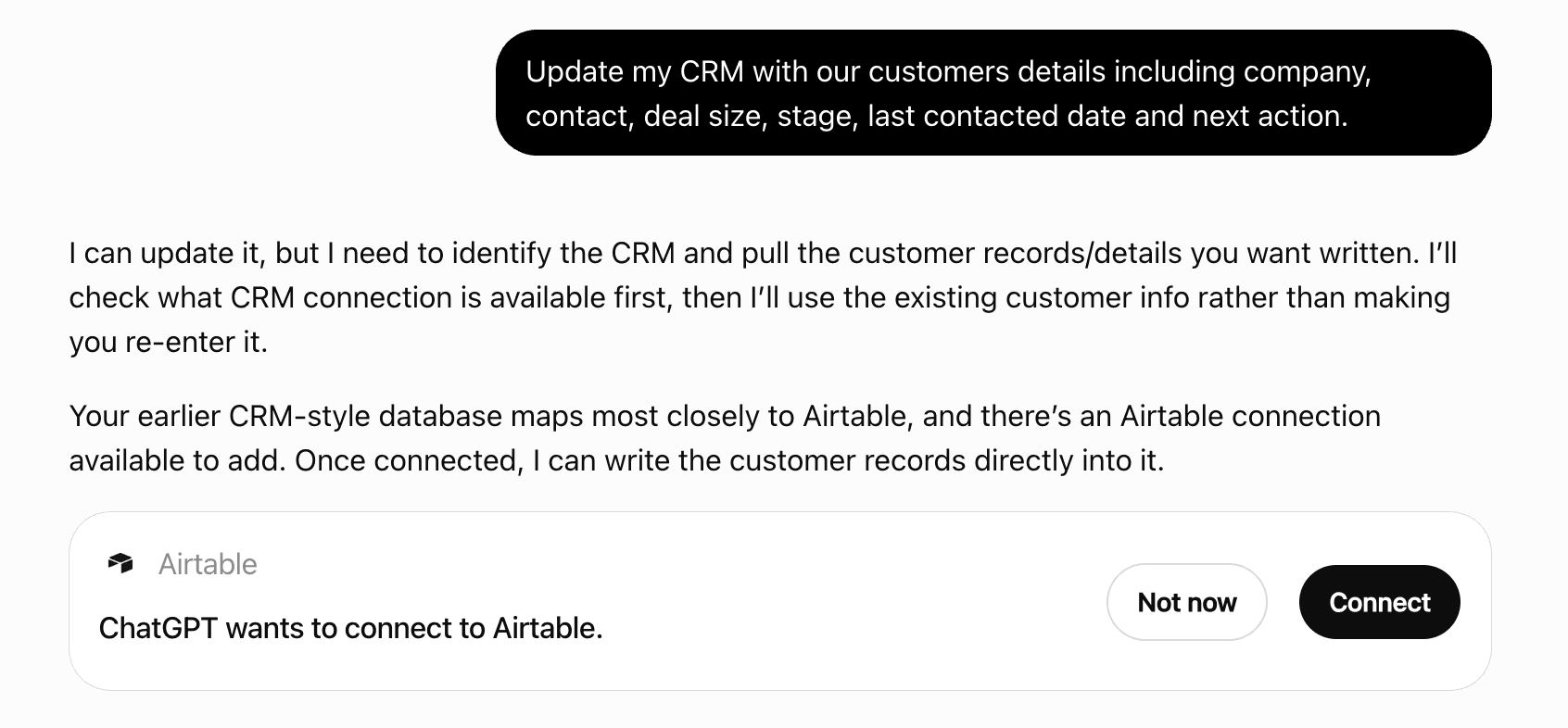
Get alerts for Causal Mechanism Registry
Get updates when Causal Mechanism Registry’s Discoverability Score or category rank changes.
Competitive lineup
8 tools agents can invoke

Causal Mechanism Registry ChatGPT Plugin FAQ
How the directory, categories and Discoverability Score work.
Read the methodologyHow do I improve Causal Mechanism Registry's ChatGPT Plugin discoverability?
The levers are the listing surface agents actually read: names, descriptions, keywords, tool metadata, and registry health. Which lever matters depends on where discovery breaks, which is what continuous measurement shows.
Where is this profile measured?
This profile uses the geography attached to the latest public registry snapshot: US. Locale tags are intentionally omitted.