
Query Streams
Query databases behind your firewall from Claude. One small agent, one outbound connection, no VPN, no inbound ports, no credentials in Claude.
 View in the Claude registry
- Brand
- Query Streams
- Category
- Data & Analytics
- Primary Subcategory
- Enterprise Data Connectors & MCP Gateways
Integration details
Description
Query Streams lets Claude query the databases behind your firewall without a VPN, an inbound port, or a database credential ever leaving your network. A small Network Agent installed next to your data makes one outbound connection. Claude writes the SQL; the agent runs it where the data lives and is read-only by design: only SELECT, WITH and EXPLAIN run, and the check happens on your side of the connection, not in the cloud. New: the agent now does the heavy lifting, so Claude spends its attention on the thinking. Before reading a large table, Claude can ask for its shape: row count, token cost and how many rows fit, with no rows sent. It can ask for a profile instead of rows: counts, empties, ranges, averages and top values for every column, in one pass. A result can be held on the agent, so "break it down by region" is answered without a second database query. Answers are sized to Claude's budget: whole rows kept, long text trimmed with the full value one call away, anything left out reported. Deeper analyses run over a held result: data-quality report, anomalies, segments, comparison and diff between two runs. Sources: SQL Server, PostgreSQL, MySQL, MariaDB, Oracle, BigQuery, Snowflake, SQLite, DuckDB, Microsoft Access, folders of CSV, Parquet, Excel and log files, and API sources such as Stripe, Shopify, HubSpot, Google Analytics, Google Ads and Google Search Console. Semantic Intelligence gives Claude the meaning: a description for every table and column, status codes decoded and joins discovered where no foreign keys are declared, so Claude writes correct SQL first time. Saved and federated queries are available by name. Access is per user and per organization with read, analyze and execute scopes, instant revocation and a log of every call. Works on every Query Streams plan, including Free. The analytic toolset is included from Personal Core and the deeper analyses from Business Core. Requires the Network Agent installed next to your data.
- Integration type
- Connector
- Verification status
 Community connector
- Platform
- Claude
- Primary Subcategory
- Enterprise Data Connectors & MCP Gateways
- Secondary Subcategories
- None listed
- Brand
- Query Streams
- Access
- Account required
- First tracked
- 2026-09-27
- Tool count
- 20
- Market
- US
The Primary Subcategory used for this profile’s headline score.
Other Subcategories where the Integration is listed.
 Agent DiscoverabilityClaude Discoverability Score
Claude Connector discovery is coming soon
Community Connectors only appear in Claude’s registry.Once verified, organic discovery begins and we can calculate your score.Read more about Community Connector verification.
No spam. Unsubscribe any time.
What discovery looks like
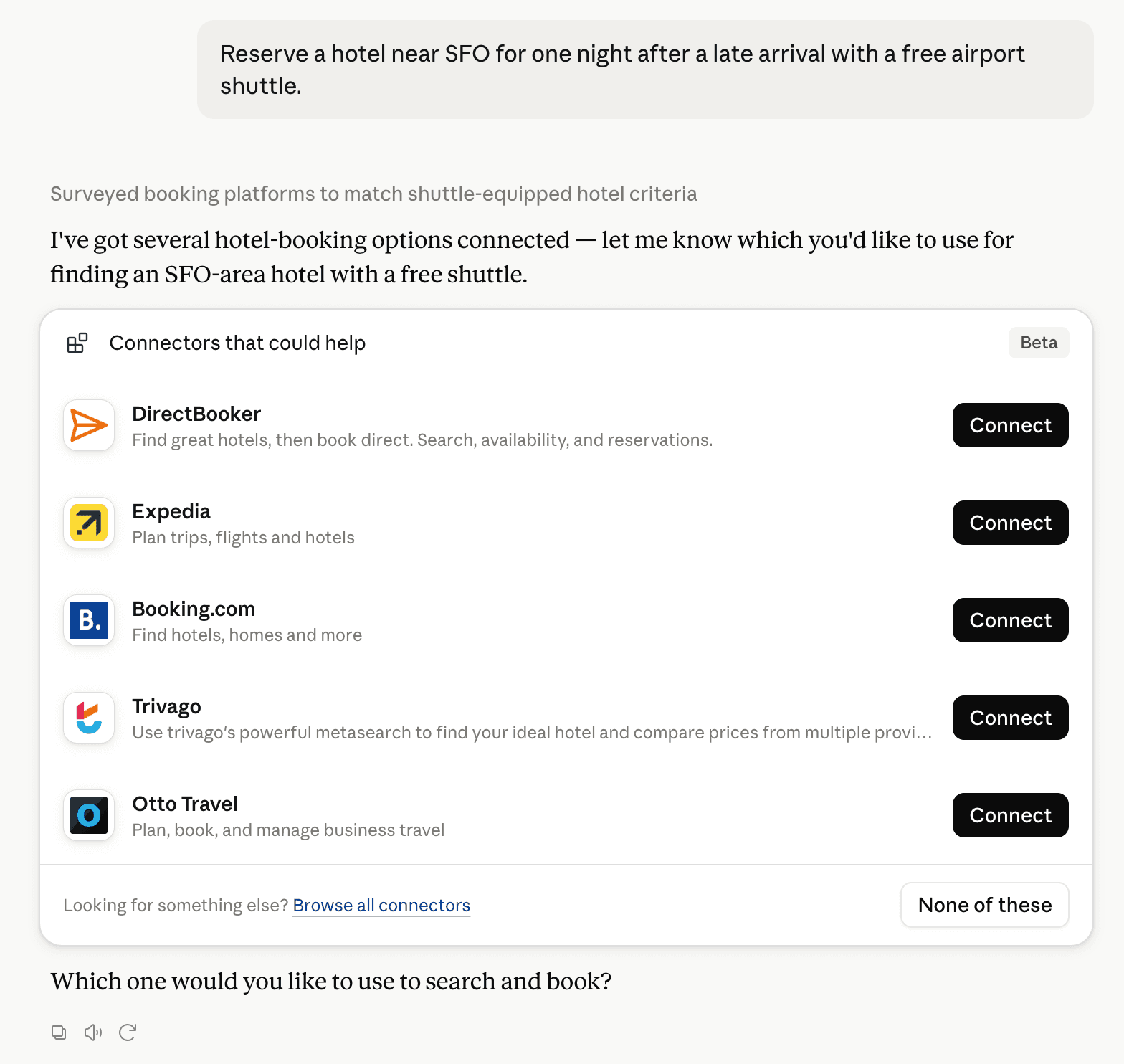
Claude can surface verified Connectors when they match a user’s Prompt.
How Claude Connector discovery works
Your Connector will compete to appear for users’ Prompts once Claude verifies it
Competing in Claude Enterprise Data Connectors & MCP Gateways
View Category20 tools agents can invoke

Query Streams Claude Connector FAQ
How the directory, categories and Discoverability Score work.
Read the methodologyHow do I improve Query Streams's Claude Connector discoverability?
The levers are the listing surface agents actually read: names, descriptions, keywords, tool metadata, and registry health. Which lever matters depends on where discovery breaks, which is what continuous measurement shows.
What are Query Streams alternatives on Claude?
As of 2026-11-02, Query Streams competes with Salesforce - Beta, Blaze SQL, HubSpot, Pipedrive, Zoho CRM, PlanetScale, Neon, Supabase and 60 more in Claude Enterprise Data Connectors & MCP Gateways, ranked by public Discoverability Score.
Where is this profile measured?
This profile uses the geography attached to the latest public registry snapshot: US. Locale tags are intentionally omitted.