
Senzing
Entity resolution for Identity Intelligence: dedupe, match, and link people and company records across systems. Know who is who. Reveal hidden relationships.
 View in the Claude registry
- Brand
- Senzing
- Category
- Data & Analytics
- Primary Subcategory
- Data Validation & Normalization Utilities
Integration details
Description
The Senzing® connector is a forward-deployed engineer in a box: ask it anything about Senzing. Every answer is grounded in Senzing's own documentation and indexed code rather than model training data. Use it to deduplicate lists, match or merge records across sources, screen against watchlists, and produce the resolved entities that golden records for MDM and customer 360 are built from. Because it carries the full runbook, you don't drive it one step at a time. Hand Claude a few unmapped data files and describe what you want, and it can map your sources, deploy and load Senzing, resolve and analyze the data, and build an interactive explorer over the results. What is normally a multi-week integration becomes an afternoon, with no entity-resolution background required. You just ask. Then start answering who is who and who is related to whom, or build an entity-resolved knowledge graph that surfaces the connections nobody declared. Every resolution carries its evidence: why two records came together, or why they didn't. Claude can surface that explanation for any match you question. You can ask Claude to: * "Match these payment records to my customers and show me which ones didn't match." * "Dedupe this list of people and show me the duplicates it found." * "Here are three customer files from different systems. Build me a demo that finds the same people across them and lets me explore the matches." * "Build me a service that matches incoming payment records to my customer master as they arrive." * "How would entity resolution help with my problem, and what would it cost?" The connector needs no live Senzing instance and no authentication, and sends no user data or PII to Senzing. Senzing itself is a headless developer library that Claude deploys locally in your environment. Data mapping and resolution both run there, never on Senzing's servers, and Senzing contains only the data you load into it. For the best experience, use Claude Code, or allowlist mcp.senzing
- Integration type
- Connector
- Verification status
 Community connector
- Platform
- Claude
- Primary Subcategory
- Data Validation & Normalization Utilities
- Secondary Subcategories
- None listed
- Brand
- Senzing
- Access
- No account required
- First tracked
- 2026-07-06
- Tool count
- 13
- Market
- US
The Primary Subcategory used for this profile’s headline score.
Other Subcategories where the Integration is listed.
 Agent DiscoverabilityClaude Discoverability Score
Claude Connector discovery is coming soon
Community Connectors only appear in Claude’s registry.Once verified, organic discovery begins and we can calculate your score.Read more about Community Connector verification.
No spam. Unsubscribe any time.
What discovery looks like
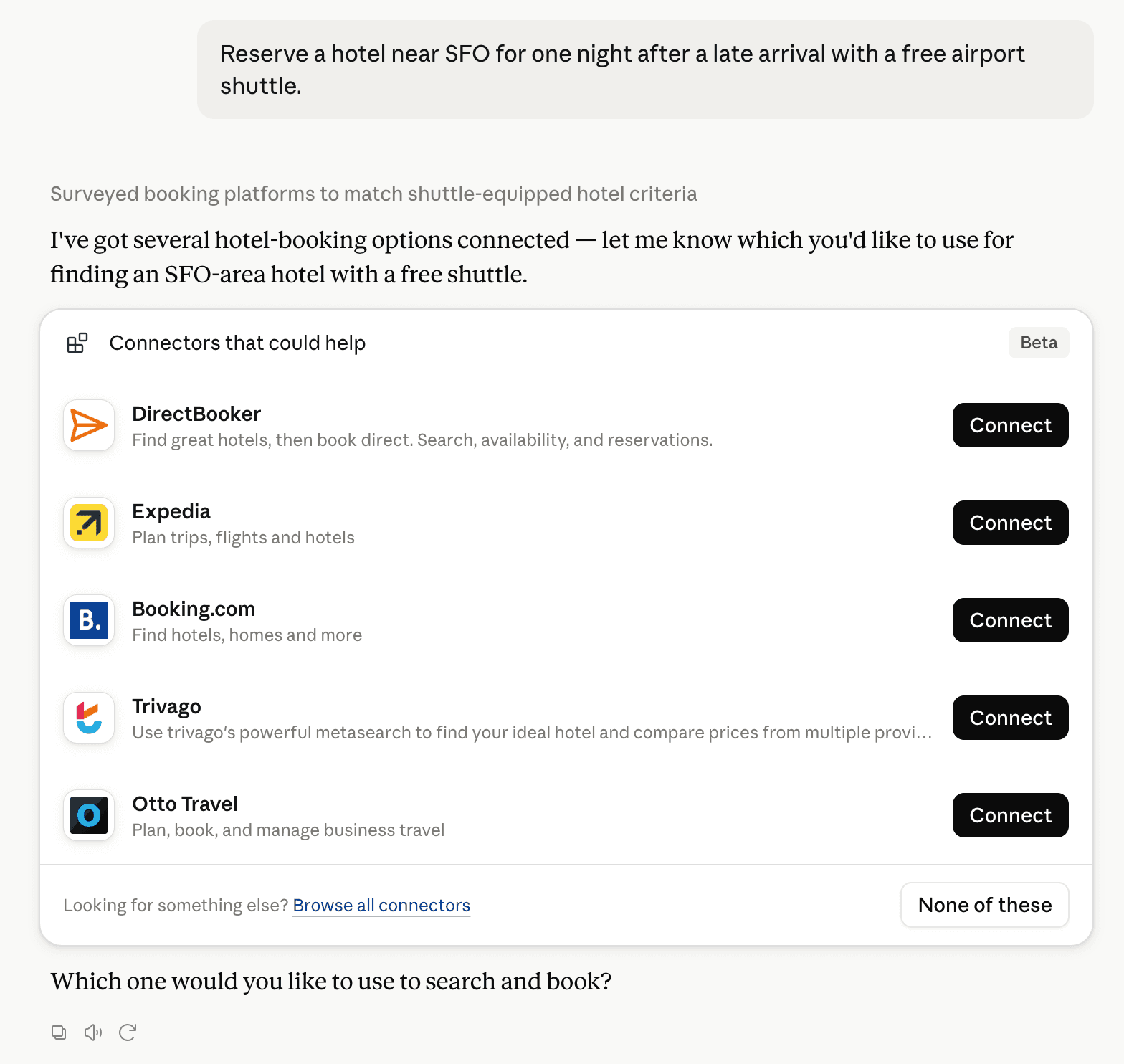
Claude can surface verified Connectors when they match a user’s Prompt.
How Claude Connector discovery works
Your Connector will compete to appear for users’ Prompts once Claude verifies it
Competing in Claude Data Validation & Normalization Utilities
View Category13 tools agents can invoke

Senzing Claude Connector FAQ
How the directory, categories and Discoverability Score work.
Read the methodologyHow do I improve Senzing's Claude Connector discoverability?
The levers are the listing surface agents actually read: names, descriptions, keywords, tool metadata, and registry health. Which lever matters depends on where discovery breaks, which is what continuous measurement shows.
What are Senzing alternatives on Claude?
As of 2026-11-02, Senzing competes with Cloudcrane, Datawell, E-Invoice Validator, EstimateGuard, Everyn, Klisten EntityResolver, Schema in Claude Data Validation & Normalization Utilities, ranked by public Discoverability Score.
Where is this profile measured?
This profile uses the geography attached to the latest public registry snapshot: US. Locale tags are intentionally omitted.