



Rivul
Search 300M+ scholarly paper records by meaning and open the full record for any result. Free, read-only.
 View in the Claude registry
- Brand
- Rivul AI
- Category
- Data & Analytics
- Primary Subcategory
- Academic Literature & Citation Search
Integration details
Description
Rivul is a free remote MCP server for finding scholarly literature. Claude can search more than 300 million scholarly paper records by meaning, not only by keyword, then open the full record for any result. Tools (all read-only): - search_papers: semantic search with optional filters for year range, minimum citations, open access only, topic and field, sorted by relevance, most cited, newest or oldest. Each result gives the title, year, first authors, citation count, DOI and a short snippet. - get_paper_details: the full record for one work, with every author held, venue, work type, topic, field, publication date and open-access links. - usage_status: your workspace's MCP usage for the current day. Results come only from the index, never from a model, and each one carries a stable OpenAlex ID so you can check the source. Records come from a dated snapshot of the OpenAlex dataset, and the snapshot date is returned with every response. Rivul is meant for scoping and discovery alongside your library's databases. Rivul is free for everyone: sign in with Google at rivul.ai. No payment and no AI key are needed to use the MCP server. Fair-use rate limits apply.
- Integration type
- Connector
- Verification status
 Community connector
- Platform
- Claude
- Primary Subcategory
- Academic Literature & Citation Search
- Secondary Subcategories
- None listed
- Brand
- Rivul AI
- Access
- Account required
- First tracked
- 2026-11-04
- Tool count
- 3
- Market
- US
The Primary Subcategory used for this profile’s headline score.
Other Subcategories where the Integration is listed.
 Agent DiscoverabilityClaude Discoverability Score
Claude Connector discovery is coming soon
Community Connectors only appear in Claude’s registry.Once verified, organic discovery begins and we can calculate your score.Read more about Community Connector verification.
No spam. Unsubscribe any time.
What discovery looks like
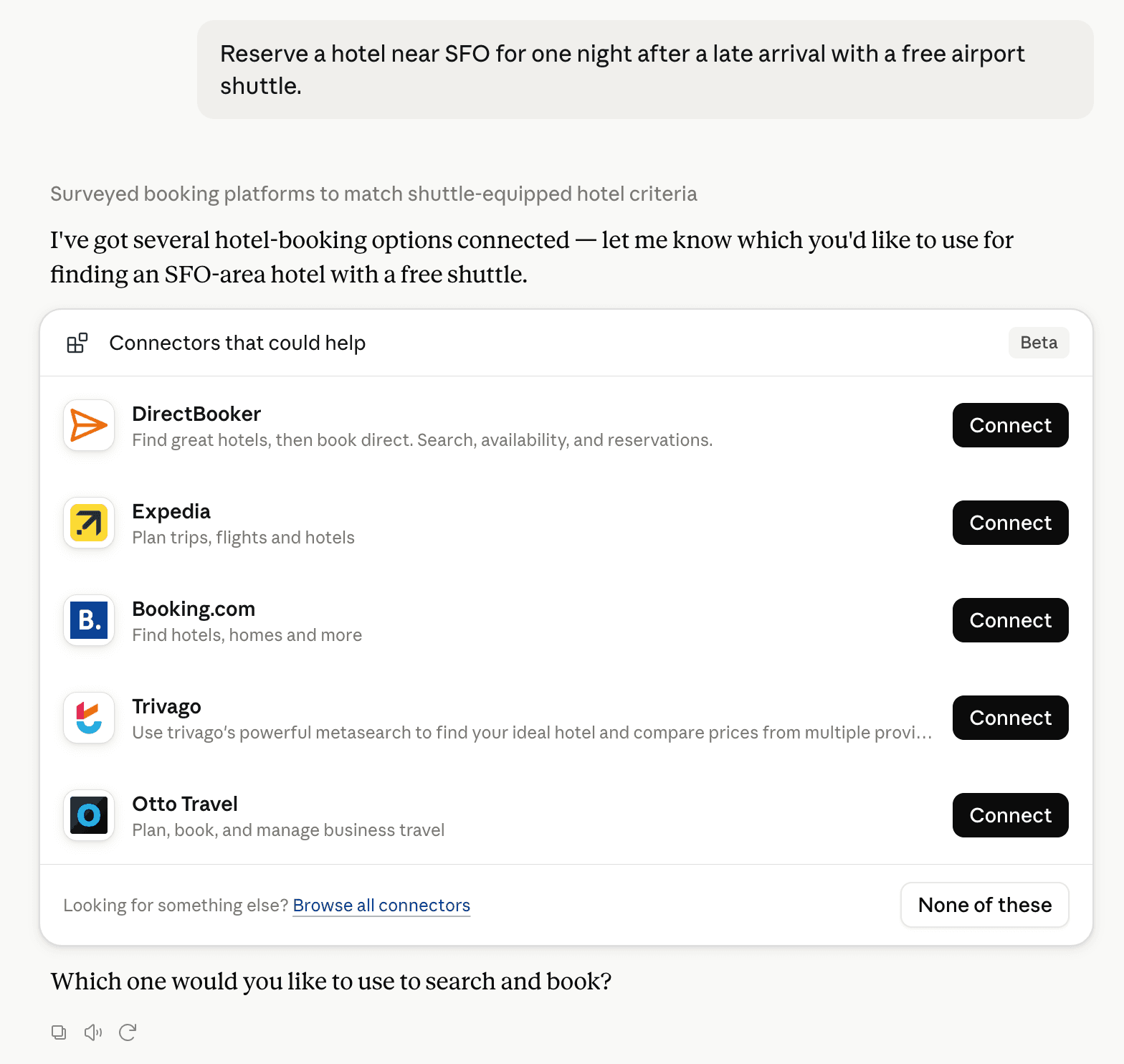
Claude can surface verified Connectors when they match a user’s Prompt.
How Claude Connector discovery works
Your Connector will compete to appear for users’ Prompts once Claude verifies it
Competing in Claude Academic Literature & Citation Search
View Category
3 tools agents can invoke

Rivul Claude Connector FAQ
How the directory, categories and Discoverability Score work.
Read the methodologyHow do I improve Rivul's Claude Connector discoverability?
The levers are the listing surface agents actually read: names, descriptions, keywords, tool metadata, and registry health. Which lever matters depends on where discovery breaks, which is what continuous measurement shows.
What are Rivul alternatives on Claude?
As of 2026-11-04, Rivul competes with Wiley Scholar Gateway, Firecrawl, alphaXiv, bioRxiv, Climate Insights Directory, Consensus, Elicit, Find Research and 13 more in Claude Academic Literature & Citation Search, ranked by public Discoverability Score.
Where is this profile measured?
This profile uses the geography attached to the latest public registry snapshot: US. Locale tags are intentionally omitted.