



Stackurity
Ask Claude what is vulnerable or end-of-life across your servers, apps, repositories, images and Kubernetes, why it matters, and which version to upgrade to, from your Stackurity inventory.
 View in the Claude registry
- Brand
- Unknown
- Category
- Pending
- Primary Subcategory
- Application Security & Vulnerability Management
Integration details
Description
Stackurity keeps one live inventory of the software you run: Linux servers, deployed applications, repositories, container images and Kubernetes. It matches that inventory against open vulnerability data (OSV and Linux distribution advisories), the CISA Known Exploited Vulnerabilities list and endoflife.date, and turns the results into a short list of upgrades, most urgent first. With this connector, Claude can answer questions about your own estate using that data: - What should we upgrade first, and which version should we move to? - Where is a package or runtime installed, and at which versions? - Are we affected by a given CVE, and on which hosts and applications? - Why does this finding have its priority, and what evidence is it based on? - We deployed a fix this morning: what has closed since then, and which assets have not reported yet? - Are any keys or passwords written in files on our servers, and can anyone download them? - Which packages are behind their latest release, even where no vulnerability is known? Answers come from your Stackurity data and include the ids, versions and advisory sources they rest on, so Claude can cite them. When data is missing, the tools say so rather than guess. The connection is read-only by default. When you connect, you choose the organisation, optionally one project, and a role no higher than your own. If you tick "Allow changes", Claude can also create and rename projects, add or remove assets, create a server install command, assign, snooze or ignore issues, ask for a re-check and invite a colleague. Each change is shown to you as a preview first and is applied only after you confirm. Every change is limited by your role and recorded in the activity log. You can disconnect at any time under Integrations, AI assistants. Requires a Stackurity Cloud account (app.stackurity.dev). Stackurity is open-core and is operated by OUTDO INC.
- Integration type
- Connector
- Verification status
 Community connector
- Platform
- Claude
- Category
- Pending
- Primary Subcategory
- Application Security & Vulnerability Management
- Secondary Subcategories
- None listed
- Brand
- Unknown
- Access
- Account required
- First tracked
- 2026-11-05
- Tool count
- 23
- Market
- US
The broad Category that contains the Primary Subcategory.
The Primary Subcategory used for this profile’s headline score.
Other Subcategories where the Integration is listed.
 Agent DiscoverabilityClaude Discoverability Score
Claude Connector discovery is coming soon
Community Connectors only appear in Claude’s registry.Once verified, organic discovery begins and we can calculate your score.Read more about Community Connector verification.
No spam. Unsubscribe any time.
What discovery looks like
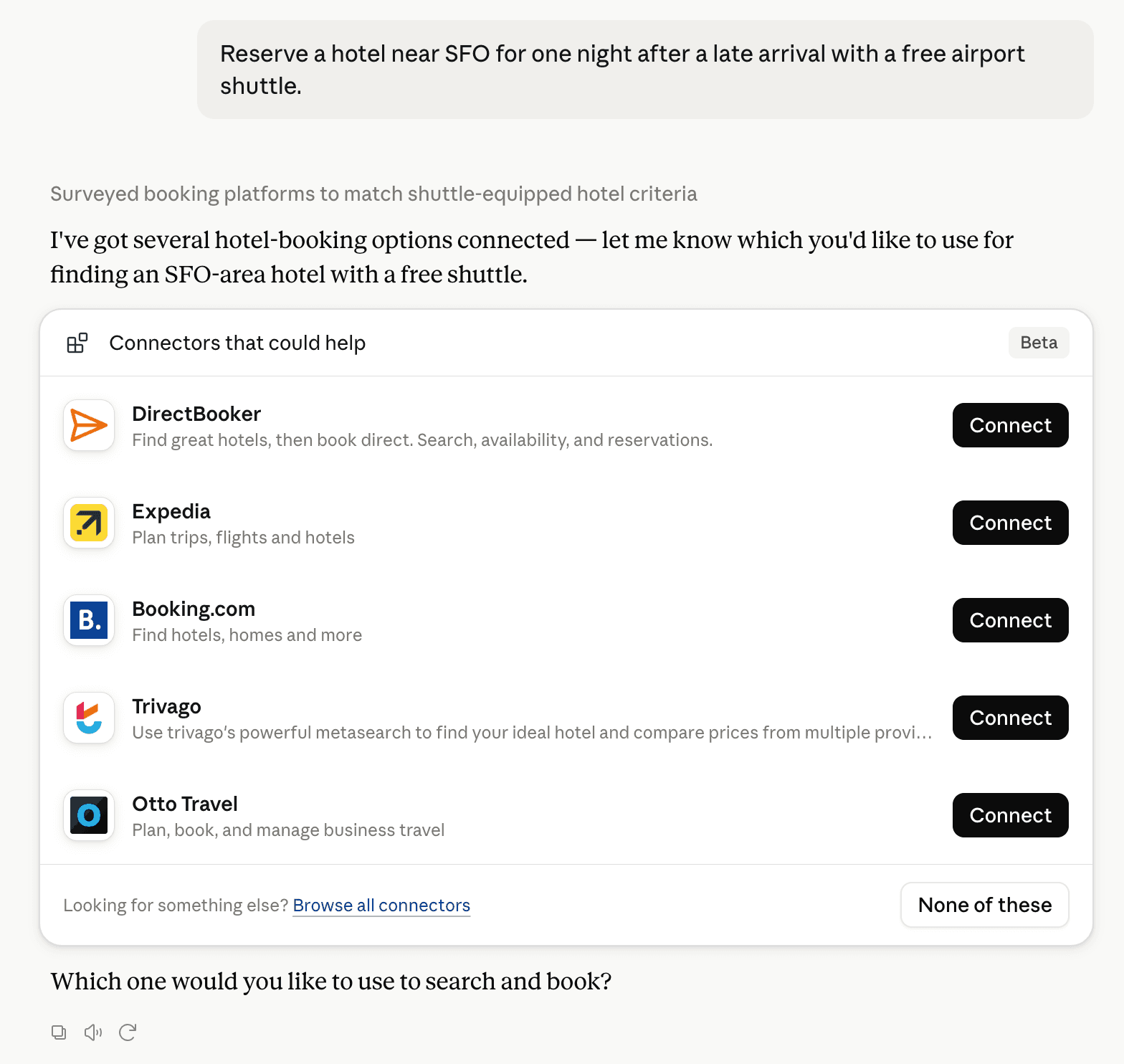
Claude can surface verified Connectors when they match a user’s Prompt.
How Claude Connector discovery works
Your Connector will compete to appear for users’ Prompts once Claude verifies it
Competing in Claude Application Security & Vulnerability Management
View Category23 tools agents can invoke

Stackurity Claude Connector FAQ
How the directory, categories and Discoverability Score work.
Read the methodologyHow do I improve Stackurity's Claude Connector discoverability?
The levers are the listing surface agents actually read: names, descriptions, keywords, tool metadata, and registry health. Which lever matters depends on where discovery breaks, which is what continuous measurement shows.
What are Stackurity alternatives on Claude?
As of 2026-11-05, Stackurity competes with CloudBees Unify MCP Server, ActiveLayer, Affirmed AI, AgentAvow, AgentMart Site Check, AI Website Security, Apiiro Guardian, Arcjet and 40 more in Claude Application Security & Vulnerability Management, ranked by public Discoverability Score.
Where is this profile measured?
This profile uses the geography attached to the latest public registry snapshot: US. Locale tags are intentionally omitted.