



Dependency Risk Audit
Checks the pinned packages in a lockfile for known vulnerabilities and risky licences, and alerts when new vulnerabilities appear.
 View in the Claude registry
- Brand
- Tidy Button
- Category
- Operations
- Primary Subcategory
- Application Security & Vulnerability Management
Integration details
Description
Dependency Risk Audit reads a lockfile or manifest that the user pastes or links (a public raw file address) and checks each pinned package against the OSV.dev vulnerability database. It understands package-lock.json (v1 to v3), yarn.lock, pnpm-lock.yaml, requirements.txt, poetry.lock, Pipfile.lock, go.sum, go.mod, Cargo.lock, Gemfile.lock, composer.lock and Maven pom.xml (direct dependencies with literal versions). Each vulnerability is reported with its identifiers and aliases (CVE, GHSA), severity and CVSS score where the record carries one, affected and fixed versions, and a link to the OSV record. A licence summary from deps.dev and from the lockfile itself flags copyleft licences (GPL, AGPL, LGPL, SSPL and similar) and unknown licences. Files with more than 500 packages are checked in parts with an offset. A project can be saved: the server re-scans it on a schedule (weekly on the free plan, daily on Pro), records an alert for each new vulnerability that affects a saved package, and emails one digest per check round. Vulnerability records come from OSV.dev and the databases it aggregates; each source keeps its own licence (for example the GitHub Advisory Database is CC-BY 4.0). Package metadata comes from deps.dev. Licences are as declared by the package, not legal advice, and results are a screening aid rather than a guarantee that a package is safe.
- Integration type
- Connector
- Verification status
 Community connector
- Platform
- Claude
- Primary Subcategory
- Application Security & Vulnerability Management
- Secondary Subcategories
- None listed
- Brand
- Tidy Button
- Access
- Account required
- First tracked
- 2026-11-17
- Tool count
- 10
- Market
- US
The Primary Subcategory used for this profile’s headline score.
Other Subcategories where the Integration is listed.
 AgentDiscoClaude Discoverability Score
Claude Connector discovery is coming soon
Community Connectors only appear in Claude’s registry.Once verified, organic discovery begins and we can calculate your score.Read more about Community Connector verification.
No spam. Unsubscribe any time.
What discovery looks like
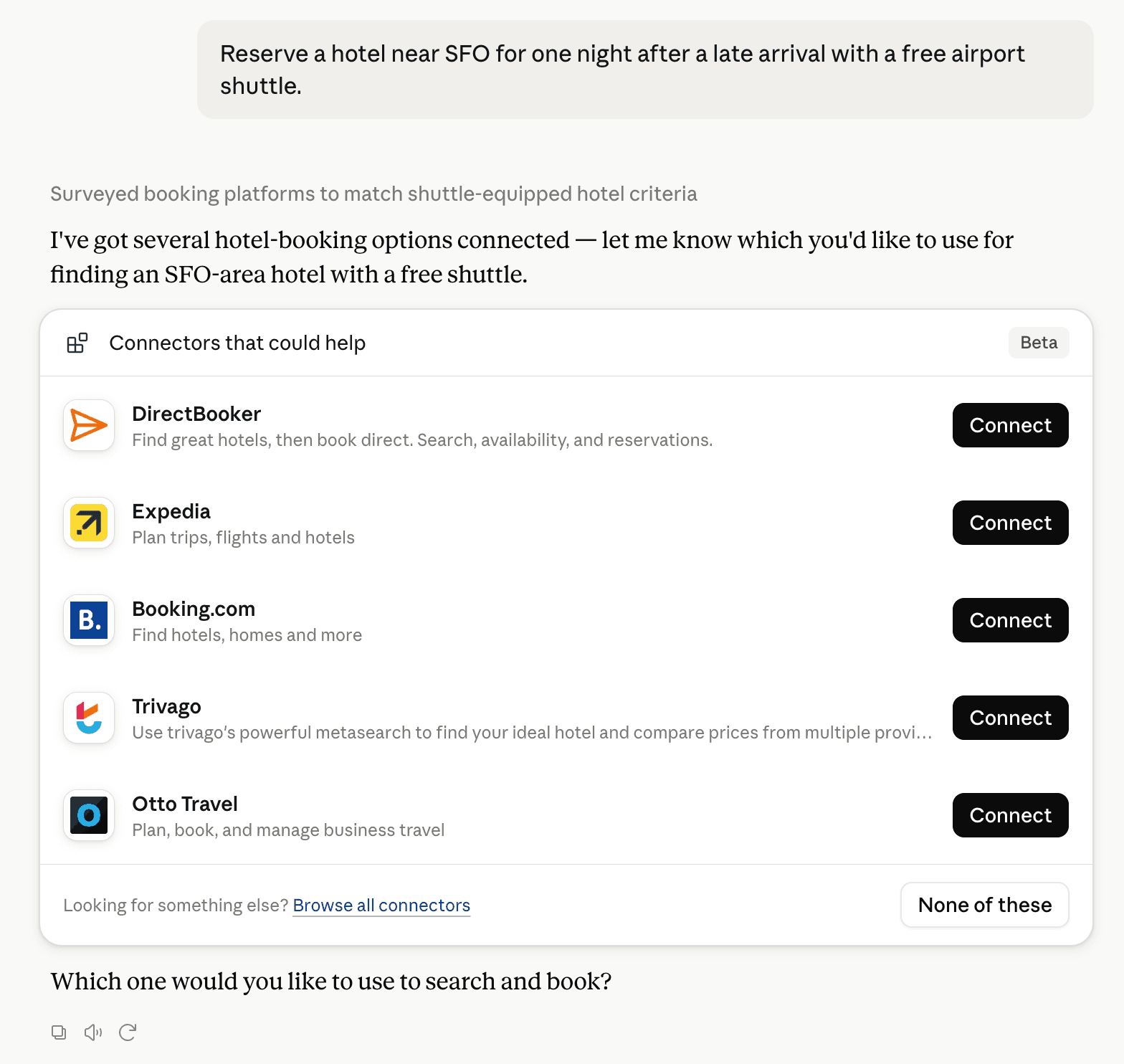
Claude can surface verified Connectors when they match a user’s Prompt.
How Claude Connector discovery works
Your Connector will compete to appear for users’ Prompts once Claude verifies it
Competing in Claude Application Security & Vulnerability Management
View Category10 tools agents can invoke

Dependency Risk Audit Claude Connector FAQ
How the directory, categories and Discoverability Score work.
Read the methodologyHow do I improve Dependency Risk Audit's Claude Connector discoverability?
The levers are the listing surface agents actually read: names, descriptions, keywords, tool metadata, and registry health. Which lever matters depends on where discovery breaks, which is what continuous measurement shows.
What are Dependency Risk Audit alternatives on Claude?
As of 2026-11-18, Dependency Risk Audit competes with CloudBees Unify MCP Server, ActiveLayer, Affirmed AI, AgentAvow, AgentMart Site Check, AI Website Security, Apiiro Guardian, Arcjet and 49 more in Claude Application Security & Vulnerability Management, ranked by public Discoverability Score.
Where is this profile measured?
This profile uses the geography attached to the latest public registry snapshot: US. Locale tags are intentionally omitted.