
Tenant Strike
Talk to your Microsoft 365 and Azure tenant: ask what a read-only security scan found, how the weaknesses chain into attack paths and what to fix first. Plus a free outside-in check of your domain.
 View in the Claude registry
- Brand
- Tenant Strike
- Category
- Security
- Primary Subcategory
- Application Security & Vulnerability Management
Integration details
Description
Tenant Strike is a read-only security scanner for Microsoft 365 and Azure. This connector lets you talk to your tenant's security in Claude. Ask what is wrong and what to fix first. Claude reads every finding from your latest scan with its severity, what it means and how to fix it step by step, the attack paths Tenant Strike built from those findings with each step in order, your grade and how it has moved, what changed since the last scan, the risks you have accepted, your Microsoft Secure Score, and which checks could not be measured. On the Pro plan, your tenant's administrator can also turn on live reads. Their own connection can then ask Microsoft about the tenant as it is right now: who has registered MFA, Conditional Access policies, admin roles, app permissions, groups, recent directory changes, one person's sign-ins, device compliance, sharing settings, Secure Score and service health. Live reads go through Tenant Strike's separate read-only app, which your organization approves on its own. Anyone with a Microsoft work account also gets a free outside-in check of their own organization's domain: what its public DNS, mail and web records expose, with each finding explained and a fix. What it shares. Results are reduced before they leave Tenant Strike. Fixes and attack-path steps arrive in Tenant Strike's own wording for each check. Names, email addresses, resource identifiers, commands and anything your team typed are withheld, unless the administrator allows names in live results. Mail, files, chats, calendars and passwords are never read. Read-only by design. Every tool reads; the connector cannot change a setting or start a scan. You sign in with your Microsoft work account and approve each connection yourself, for one tenant at a time, for 24 hours to six months, and can revoke it at any time.
- Integration type
- Connector
- Verification status
 Community connector
- Platform
- Claude
- Primary Subcategory
- Application Security & Vulnerability Management
- Secondary Subcategories
- None listed
- Brand
- Tenant Strike
- Access
- Account required
- First tracked
- 2026-11-24
- Tool count
- 24
- Market
- US
The Primary Subcategory used for this profile’s headline score.
Other Subcategories where the Integration is listed.
 AgentDiscoClaude Discoverability Score
Claude Connector discovery is coming soon
Community Connectors only appear in Claude’s registry.Once verified, organic discovery begins and we can calculate your score.Read more about Community Connector verification.
No spam. Unsubscribe any time.
What discovery looks like
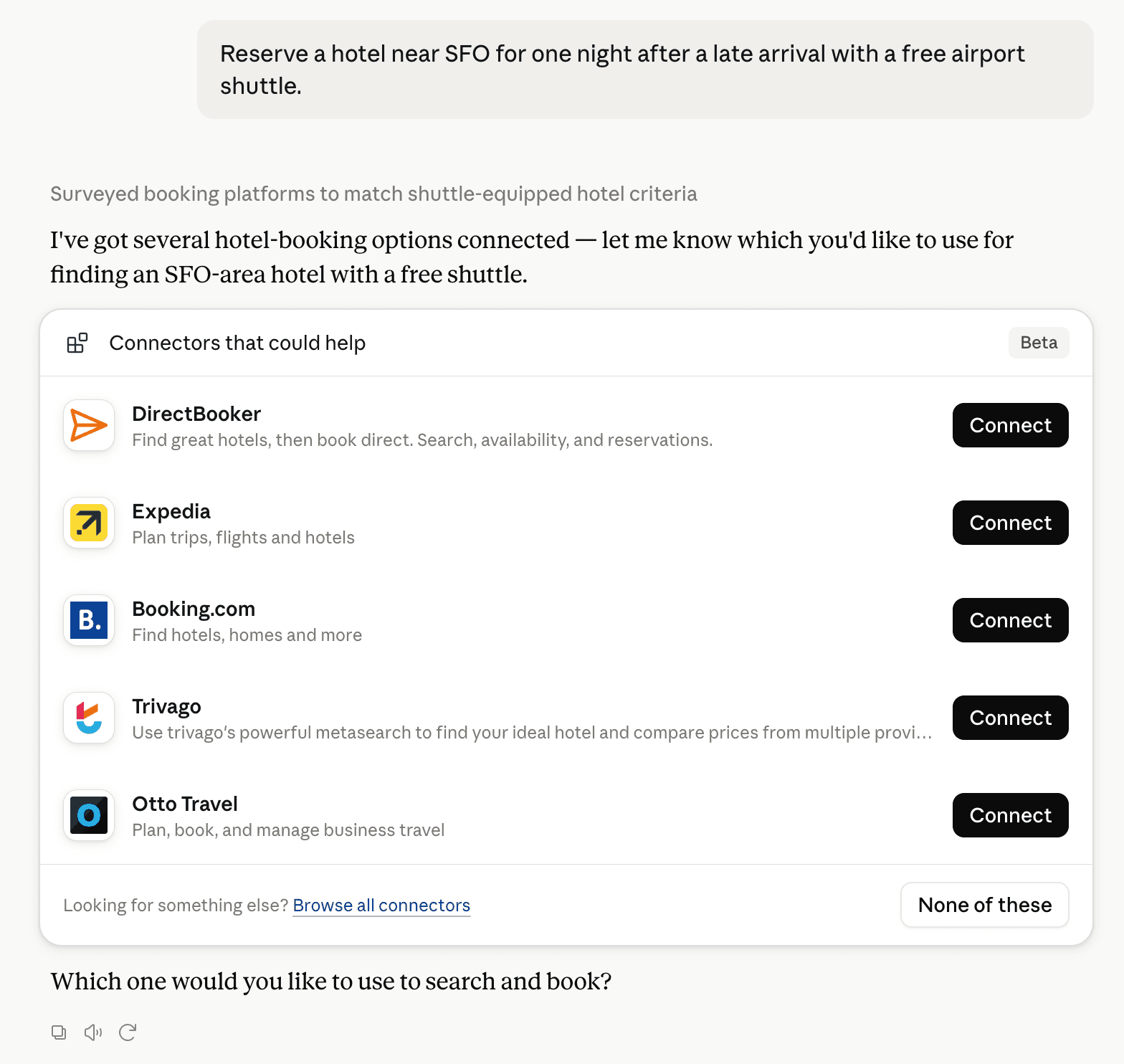
Claude can surface verified Connectors when they match a user’s Prompt.
How Claude Connector discovery works
Your Connector will compete to appear for users’ Prompts once Claude verifies it
Competing in Claude Application Security & Vulnerability Management
View Category24 tools agents can invoke

Tenant Strike Claude Connector FAQ
How the directory, categories and Discoverability Score work.
Read the methodologyHow do I improve Tenant Strike's Claude Connector discoverability?
The levers are the listing surface agents actually read: names, descriptions, keywords, tool metadata, and registry health. Which lever matters depends on where discovery breaks, which is what continuous measurement shows.
What are Tenant Strike alternatives on Claude?
As of 2026-11-25, Tenant Strike competes with CloudBees Unify MCP Server, ActiveLayer, Affirmed AI, AgentAvow, AgentMart Site Check, AI Website Security, AMJ Dependency Check, Apiiro Guardian and 70 more in Claude Application Security & Vulnerability Management, ranked by public Discoverability Score.
Where is this profile measured?
This profile uses the geography attached to the latest public registry snapshot: US. Locale tags are intentionally omitted.